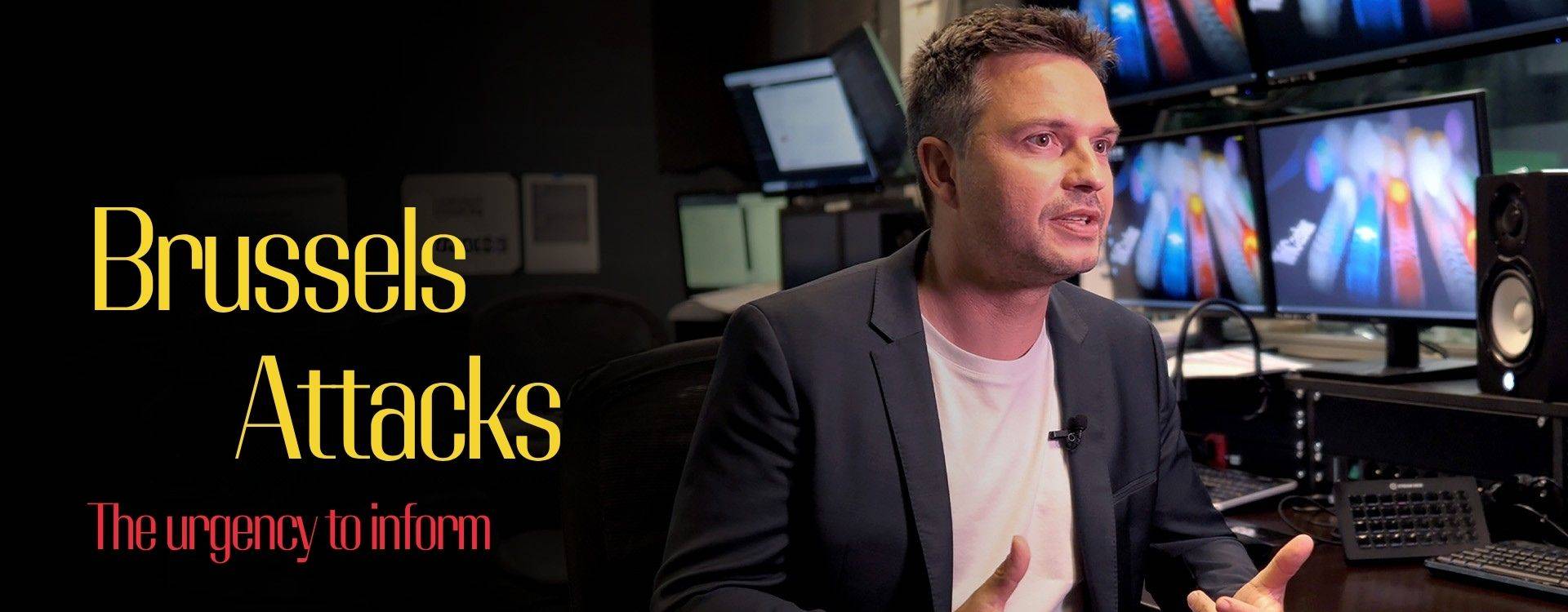
Brussels Attacks: The urgency to inform

Feature Docs

Run Time

41'

Year of Production

2025

Producer

Découpages, RTBF

Pitch

March 22, 2016: terrorist attacks strike Zaventem Airport and the Maelbeek metro station. Brussels is in shock. As emotion sweeps across the country, newsrooms upheave their editions. Louis Liégeois, then 16 years old, follows the events live. Ten years later, having become a journalist, he seeks to understand how his profession experienced that tragic day. In “Brussels Attacks: The Urgency to Inform,” journalists from RTBF, La Libre, and Agence France-Presse look back, hour by hour, on this extraordinary day. Through their testimonies, the documentary dives into the behind-the-scenes workings of newsrooms in times of crisis—where every minute counts, where information must be verified, prioritized, and transmitted despite confusion, rumors, and the pressure of live broadcasting. Between editorial decisions, technical constraints, and civic responsibility, the film reveals the inner workings of journalism when confronted with the extreme.

Videos

More Like This

Prev
Next
The Asbestos Tomb: Chronicle of a Foretold Disaster
79'
2019
The archives of eleven programmes made for RTBF between 1977 and 2003 reveal a crucial period in the use of asbestos in Belgium and Europe. All the risks were known to the industrialists, but the workers gradually discovered them through illness and death. The 20 years preceding the ban on asbestos in Belgium in 1998 were cynically won by the industry through its propaganda, denial, and lies, as well as the passivity of public authorities and the complacency of scientific and trade union circles that it managed to rally to its cause. In 1995, the removal of asbestos from the Berlaymont, the building housing the European Commission, opened the eyes of the general public to the dangers posed by asbestos. The long battle of the victims for compensation could finally begin. In 2017, the Brussels Court of Appeal confirmed that Eternit, the former champion of asbestos cement, had known about the dangers of asbestos since at least the 1960s and had done everything to hide them. But the story does not end there. Asbestos is still used in many countries. In Europe and Belgium, although banned, it is still present everywhere in the environment, homes, and schools. Cancers sometimes emerge decades after exposure, and the peak of diseases has not yet been reached. A real ticking time bomb, asbestos continues to claim hundreds of victims annually in Belgium, thousands in Europe, and over 100,000 worldwide.
People & Society
The Asbestos Tomb: Chronicle of a Foretold Disaster